DNA Synthesis
 Vector Selection
 Molecular Biology
 Oligo Synthesis
 RNA Synthesis
 Variant Libraries
 Genome KO Library
 Oligo Pools
 Virus Packaging
 Gene Editing
 Protein Expression
 Antibody Services
 Peptide Services
 DNA Data Storage
 Standard Oligo
 Standard Genome KO Libraries
 Standard Genome Editing Plasmid
 ProXpress
 Protein Products

Most antibody humanization vendors lead with the same pitch: CDR grafting, a few weeks of turnaround, and a binding guarantee. For a university lab running a single therapeutic candidate on grant funding, that pitch can be difficult to evaluate. The technical checkpoints that separate a humanization campaign that reaches preclinical milestones from one that stalls at the first developability screen are rarely covered in marketing materials.
Synbio Technologies works with academic research teams at this exact decision point, where a promising parental antibody needs to cross the bridge from discovery to translational research. The criteria that matter most are the ones that show up in project timelines and committee reports rather than service brochures.
How Does the Parental Antibody's Species Affect Humanization Strategy?
The species of origin can influence antibody humanization strategy, but the sequence itself is the most important starting point. Mouse, rat, rabbit, and camelid-derived antibodies differ in their variable-region features, germline usage, and CDR characteristics. These differences can affect framework selection, the need for back mutations, and the risk of losing binding activity during humanization.
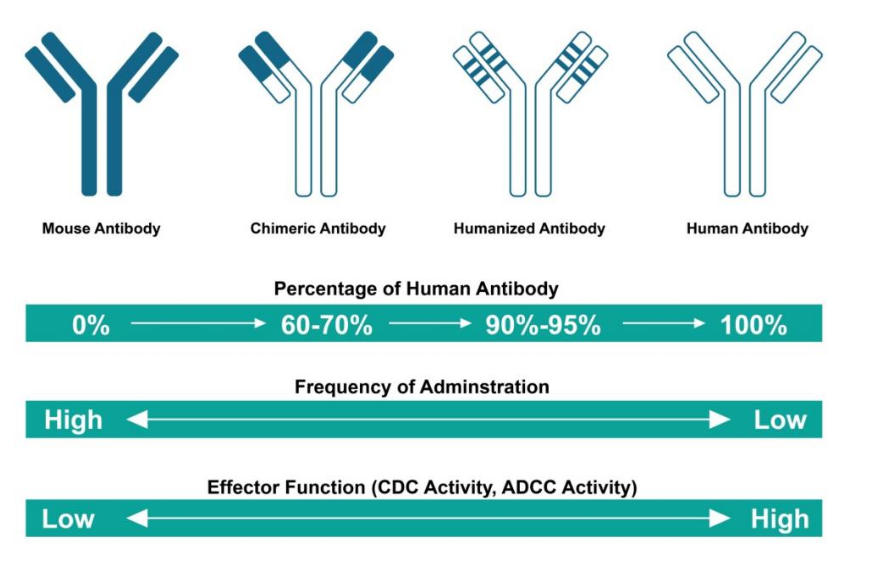
Rabbit antibodies have distinctive repertoire-diversification mechanisms, while camelid-derived VHH antibodies lack a conventional light chain and have structural features that require a tailored design approach. Rather than applying the same grafting template to every source species, a qualified provider should evaluate the parental sequence, CDR conformations, and framework compatibility before selecting a humanization strategy.
When evaluating a provider, ask whether they have documented experience across the species relevant to your project. A platform that has humanized antibodies from mice, rats, rabbits, and camelids, with affinity data to support each, has been tested across the structural diversity that academic projects actually produce. Synbio Technologies supports humanization projects involving antibodies from multiple non-human sources, including mice, rats, rabbits, camels, and birds. Its published service specifications state that the final construct is designed to achieve binding affinity within three-fold of the parental antibody. Researchers should confirm the applicable acceptance criteria, assay method, and project scope with the provider before initiating a project.
What Should Antibody Sequence Liability Screening Include?
Sequence liabilities are amino acid motifs in your antibody that predispose it to chemical modifications during manufacturing or storage. Deamidation at asparagine-glycine (NG) sites, oxidation of exposed methionine or tryptophan residues, isomerization at aspartate-glycine (DG) positions, and N-linked glycosylation at NXS/T motifs are among the most common. When these motifs sit inside or near the CDRs, they can directly reduce binding affinity or alter specificity after the antibody is produced.
A liability screening step built into the humanization workflow flags these sites before variant production begins. This means the humanization design itself can route around high-risk motifs by selecting human frameworks that avoid introducing new liabilities, or by incorporating conservative substitutions at positions that tolerate mutation without disturbing the CDR conformation.
Not every liability requires removal. A methionine in a buried framework position may oxidize at negligible rates under standard storage conditions. The value of screening is the ability to triage: which liabilities are in CDRs and must be addressed, which are in tolerable locations, and which can be monitored downstream. Providers that offer humanization with integrated PTM risk removal, where liability assessment and grafting happen in parallel rather than sequentially, can save months of iteration for labs operating under grant deadlines.
How Can You Assess Antibody Developability Before Functional Studies?
Developability is the collection of biophysical and biochemical properties that determine whether your humanized antibody can be manufactured, formulated, and stored at scale. Thermostability, solubility, viscosity, polyreactivity, and aggregation propensity are the core parameters. An antibody that binds its target with picomolar affinity but aggregates at standard storage concentrations is a dead end.
A 2025 study published in mAbs described a high-throughput developability assessment platform that evaluated 246 antibodies across 10 biophysical assays. The researchers also developed machine learning models that showed improved ability to distinguish approved antibodies from non-approved candidates compared with conventional warning-threshold approaches in their analysis. These findings support the potential of data-driven developability assessment, although model performance and generalizability depend on the dataset, assay conditions, and validation approach.
For academic labs, it is worth confirming which characterization assays are included in the quoted humanization workflow. Synbio Technologies lists Biacore-based surface plasmon resonance (SPR) analysis, antibody characterization, and production among its humanization service capabilities. Depending on the project's needs, additional developability assays may be required to assess stability, aggregation propensity, solubility, or nonspecific interactions.
How Does Computational Modeling Improve Humanization Design?
The traditional humanization approach generates a large panel of variants through combinatorial grafting and then screens them empirically. For a university lab with limited protein production capacity, fewer variants that are better designed is far more valuable than a larger panel that requires extensive screening.
Computational modeling narrows the design space before a single variant is cloned. Structure-guided CDR grafting uses 3D homology models to predict which back mutations will preserve the CDR loop conformation and which human frameworks best accommodate the non-human CDR geometry. In silico immunogenicity prediction tools score each candidate for T-cell epitope content, allowing you to rank variants by their projected clinical immunogenicity risk before investing in expression and purification.
A study published in Nature Machine Intelligence in 2025 introduced HuDiff, a diffusion-based approach for humanizing antibodies and nanobodies from CDR sequences without requiring a preselected humanized template. In one SARS-CoV-2 receptor-binding domain antibody example, the best-performing humanized variant retained binding affinity comparable to that of the parental antibody, with reported values of 0.15 nM and 0.12 nM, respectively, measured by biolayer interferometry (BLI). Although promising, this result represents a specific experimental case rather than a universal performance benchmark for computational humanization.
For labs making purchase decisions now, the practical indicator is whether the provider combines computational design with empirical validation in a closed loop. In silico CDR grafting followed by phage or yeast display screening, followed by Biacore affinity measurement, creates a workflow where each step informs the next. Synbio Technologies builds this loop by pairing computer-aided design with high-throughput phage and yeast display screening, producing 4 to 5 humanized VH/VL variants per project with at least one variant confirmed at parental-level affinity.
How Should University Labs Compare Project Timelines and Deliverables?
Grant cycles impose hard deadlines that commercial drug development rarely faces. A humanization project that takes six months to deliver results may fit a pharma pipeline but consume half of a two-year R01 funding period. The project timeline needs to align with your reporting milestones.
When comparing providers, look beyond headline turnaround claims and examine the project structure. A workflow that includes chimeric antibody construction, library building, high-throughput screening, and final characterization within a single quoted timeline is different from one that quotes a fast CDR grafting step but requires separate engagements for library screening and affinity measurement. The total time from sequence submission to characterized humanized lead is the metric that matters.
Also consider the deliverable format. Academic teams often need not just the final purified antibody but the underlying VH/VL sequences, expression constructs, and detailed binding data for grant reports and publications. Providers that include a full PDF report with variant sequences, binding affinity measurements, and characterization data reduce the documentation burden on the PI and make the results immediately usable for manuscript preparation.
What Makes an Antibody Humanization Partner a Good Fit for Academic Research?
University labs operate differently from pharmaceutical R&D groups. Budgets are smaller, timelines are fixed by funding agencies, and the PI is often the project manager, scientific advisor, and end user simultaneously. A service provider that treats academic projects as smaller versions of pharma engagements may miss the ways that academic constraints shape project design.
A partner-model provider adapts to those constraints. That might look like consultation on which humanization approach fits your specific parental antibody and target before the project starts. It might mean adjusting the variant panel size based on your production capacity and budget rather than defaulting to a fixed package. It almost always means accessible technical communication, where your questions reach the scientists doing the work rather than a support queue.
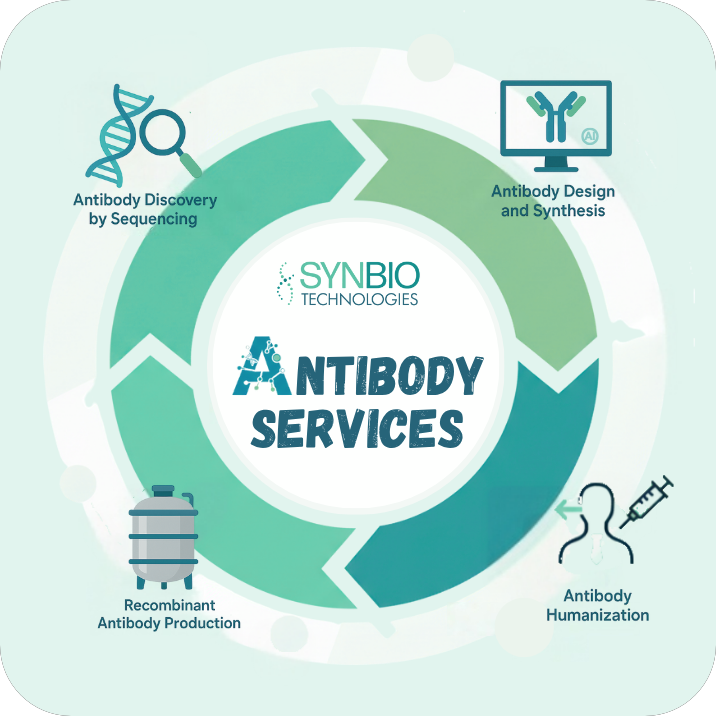
Synbio Technologies brings extensive practical experience across humanized antibody design, screening, and production, with a team that works directly with PIs and lab managers to scope projects around the realities of academic research. The integration of gene synthesis, antibody engineering, and protein expression under one platform means that a humanization project can connect directly to downstream services if the project expands.
Choosing a humanization partner is an investment in your candidate's path forward. The provider you select defines not only whether your humanized antibody retains its binding and avoids immunogenicity risks, but also whether the data you generate is robust enough to support your next grant application, your next publication, and your next translational step. Ask the hard questions about species coverage, liability screening, developability integration, computational design, and project structure before signing. The answers will tell you whether you are buying a service or gaining a research partner.